TIP TIME: Types of quilt batting
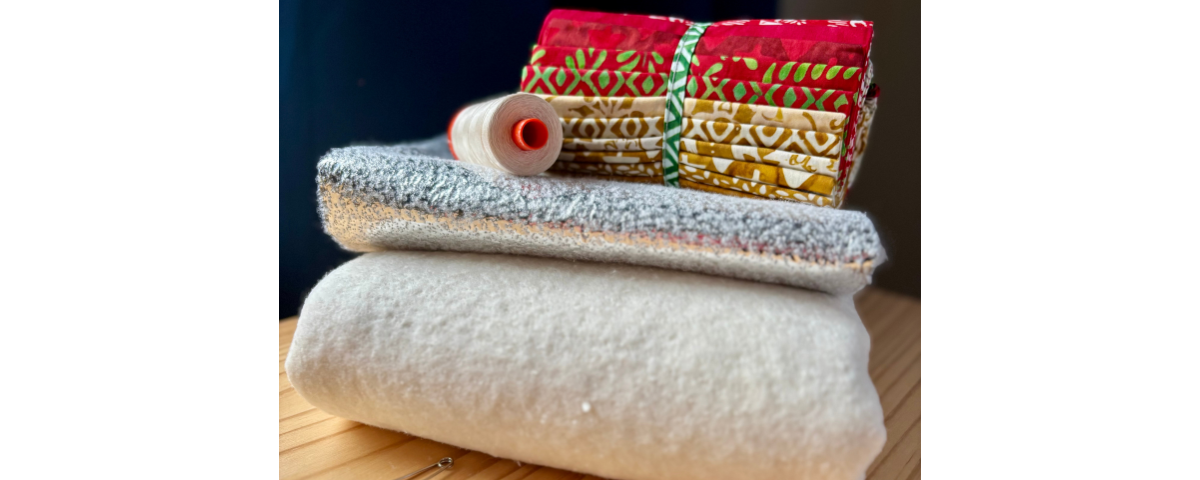
Batting is the cozy middle layer of a quilt – the part that gives warmth and highlights your quilted stitches. Choosing the right batting can make all the difference in how your project looks, feels and even wears over time.
Here are a few things to consider when selecting your batting:
1. Fibre content
Common options include cotton, polyester and cotton-poly blends. There are a variety of reasons why you may choose one over the other:
- Cotton tends to shrink and will give you that lovely crinkle after washing. Some projects, like those that come into contact with high heat, require 100% cotton batting.
- Polyester is often loftier than cotton, a great choice if you want to showcase your quilted stitches.
- Cotton-poly blends are usually a favourite with long-armers because the cotton gives the batting that traditional quilt feel, while the polyester provides a bit of structure.
2. Scrim
This is a stabilizing layer composed of woven fibers sometimes added to quilt batting. Quilt batting with scrim is useful when machine quilting because it prevents the batting from stretching as it is pulled through the machine. In contrast, if you’re hand quilting, batting without scrim makes it easier for the needle to pass through the fabric layers.
3. Use and care
For everyday quilts, especially baby quilts that will frequently be washed, select a cotton-poly blend to provide more durability. Whereas a wall hanging may shine with a higher-loft batting like polyester.
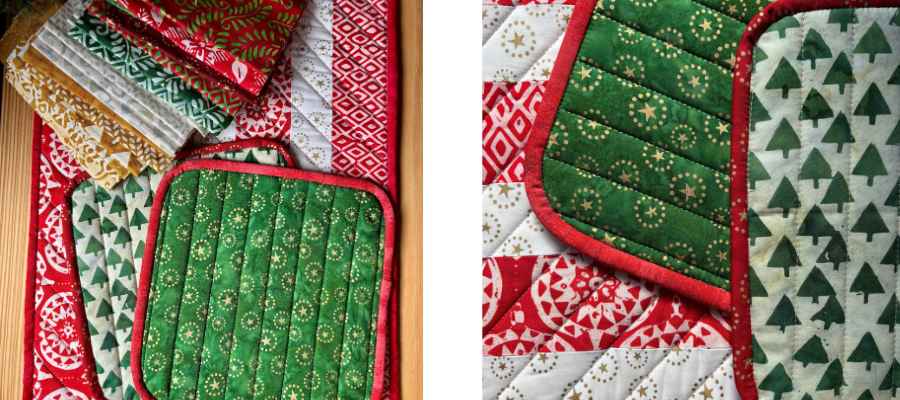
Tip time: We chose 100% cotton batting for our Quilted Hotpads tutorial because this material won’t melt in high heat, unlike a polyester or cotton-poly blend batting.